Iran’s decision to park “combat-ready” mini-submarines on the seabed in the Strait of Hormuz is a reminder that one covert move in a narrow shipping lane can rattle the world’s energy supply overnight.
Quick Take
- Iran says its Ghadir-class midget submarines are deployed in active operational positions in the Strait of Hormuz, using tactics designed for shallow, cluttered waters.
- A U.S. Ohio-class ballistic missile submarine made a rare, highly visible stop at Gibraltar, a signal of deterrence as tensions simmer.
- The Strait of Hormuz remains a global economic choke point, with roughly 21 million barrels per day transiting through a corridor only a few miles wide in places.
- Reporting varies on how many Iranian mini-subs are operational after recent strikes, underscoring uncertainty that can itself drive market and security risk.
Iran’s seabed “mini-sub” posture shifts risk onto global shipping
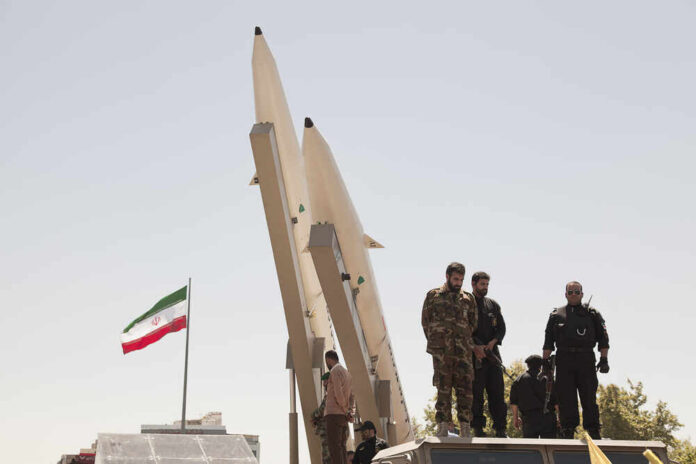
Iranian Navy commander Rear Adm. Shahram Irani said Ghadir-class midget submarines have been deployed in “active operational positions” in the Strait of Hormuz during an exercise that showed the craft surfacing in formation and submerging again. Multiple reports describe these submarines operating in heightened readiness, including “seabed-resting” tactics designed to complicate detection. In the tight Hormuz environment, that approach raises the danger of miscalculation, close encounters, or disruption to commercial routes.
Iran’s Ghadir boats are built for asymmetric sea denial rather than blue-water dominance. Descriptions in the research portray small, diesel-electric submarines optimized for the Gulf’s shallow depths, where background noise, heavy traffic, and seabed clutter reduce the advantages of larger navies. Reports also cite payload flexibility—torpedoes, anti-ship missiles, mines, and special operations support—giving Tehran multiple options short of an overt fleet engagement. None of the sources confirm specific live-fire action in this deployment.
Washington’s rare public “boomer” appearance signals deterrence, not routine
As Iran publicized its mini-sub activity, reporting also highlighted an unusual U.S. move: an Ohio-class nuclear-armed ballistic missile submarine appearing in port at Gibraltar on May 10, a rare level of visibility for a platform normally kept quiet. Sources describe the visit as a signal of U.S. resolve as the Trump administration rejected an Iranian peace counterproposal and warned the ceasefire was fragile. The submarine’s route toward the Mediterranean and likely Middle East waters was framed as deterrence messaging.
That visibility matters because it sits at the intersection of military power and political communication. A ballistic missile submarine is not a tool for day-to-day convoy escort, yet it is a core element of the U.S. nuclear triad and a reminder of escalation dominance. By contrast, Iran’s mini-subs are intended to create uncertainty close to shore and near shipping lanes. The mismatch illustrates why crises in Hormuz often revolve around ambiguity, signaling, and restraint as much as outright combat operations.
Hormuz remains a choke point where energy costs can hit families fast
The Strait of Hormuz is narrow, with traffic funneled into limited lanes, and the research estimates 20–30% of global oil flows—about 21 million barrels per day—move through it. That is why even “shadow” naval moves can show up in fuel prices and inflation expectations. Several reports outline scenarios where mining, tanker harassment, or a credible threat to transits could spike crude prices sharply. For Americans already wary of high living costs, that vulnerability is a practical kitchen-table issue, not an abstract foreign-policy debate.
Key uncertainties: how many Iranian mini-subs are truly in play
A major limitation in the public picture is basic force clarity. The research cites different counts for Iran’s mini-sub fleet and acknowledges uncertainty about survivability and readiness after recent U.S.-Israeli strikes that reportedly devastated much of Iran’s surface navy. Analysts describe Ghadirs as numerous enough to pose a persistent threat, but the exact number operational at any moment is unclear. In real-world deterrence, that fog can cut both ways—complicating planning while increasing the odds of overreaction.
Iran Deploys Combat-Ready Mini Subs In Hormuz As US Flexes Nuclear Submarine En Route https://t.co/9BWPJl6f1c
— zerohedge (@zerohedge) May 12, 2026
For U.S. policymakers, the balancing act is familiar: protect the global commons and energy arteries without stumbling into an avoidable escalation. For voters across the political spectrum—especially those who distrust “forever wars” and elite foreign-policy failures—the episode reinforces a hard truth. Strategic choke points invite brinkmanship, and bureaucratic missteps can make everyday life more expensive at home. What happens next will depend less on rhetoric than on whether both sides keep forces disciplined in a crowded waterway.
Sources:
Iran Deploys Combat-Ready Mini Subs In Hormuz As US Flexes Nuclear Submarine En Route
Iran Confirms Ghadir Midget Submarine Deployment Strait of Hormuz Counter US Navy
Iran Ghadir Submarines Strait of Hormuz Underwater Threat Global Oil Routes