When a sitting administration hauls reporters before a secret grand jury over a story about the president’s own plane, it raises hard questions about who government power is really protecting.
Story Snapshot
- Trump’s Justice Department subpoenaed four New York Times reporters over a story on security gaps in the new Air Force One.
- The subpoenas order testimony about an unspecified “alleged violation of federal criminal law,” without naming a clear crime.
- Press freedom groups say this continues a wider pattern of using leak probes and legal pressure to chill tough reporting.
- Both conservatives and liberals see a system where national security laws can double as shields for the powerful.
What the subpoenas do — and what they do not say
The Trump administration’s Justice Department sent grand jury subpoenas to four named New York Times journalists who wrote about security concerns on the new Air Force One. Federal agents delivered the orders at reporters’ homes, directing them to appear before a grand jury and give testimony tied to a possible federal crime. The subpoenas say only that the journalists must testify “in regard to an alleged violation of federal criminal law,” but do not list a statute or specific act.
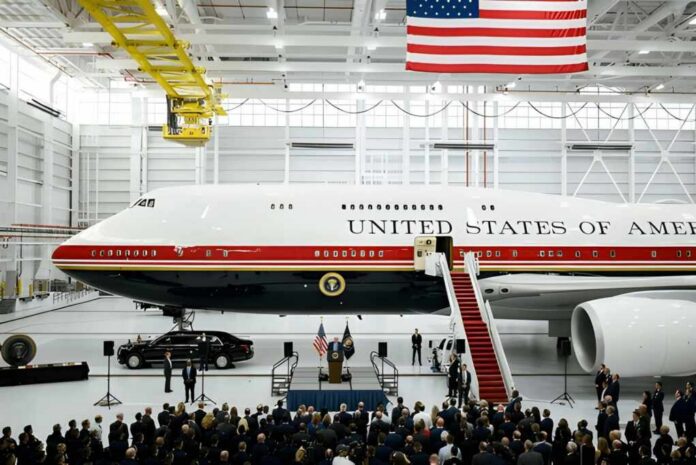
The orders came days after the reporters described alleged gaps in defensive systems on a jet, reportedly gifted by Qatar and refurbished at taxpayer expense, that is set to serve as the next Air Force One. The article raised questions about whether the aircraft had the countermeasures needed to protect the president from advanced missile threats. That focus on security lets officials argue this is a leak case, not a press freedom issue, even while they avoid showing public proof of any illegal disclosure.
A pattern of leak probes and pushback against the press
This fight does not come out of nowhere. The Trump Justice Department secretly seized phone records of New York Times reporters in a separate leak investigation into stories about Federal Bureau of Investigation Director James Comey and other security matters. In another recent case, the department issued grand jury subpoenas to reporters at The Wall Street Journal and The Washington Post, then backed down after those outlets challenged the orders with confidential legal filings. That retreat suggests the government knows its legal footing is not rock solid.
Courts have also pushed back when the administration tried to control access more directly. A federal judge ordered the Pentagon to drop a rule that forced New York Times journalists to move through the building with escorts, calling the policy “a clear violation” of First Amendment protections for a free press. Press freedom trackers show more than one thousand subpoenas and legal orders against journalists since 2000, with spikes when presidents feel under pressure. Critics argue that each new subpoena makes it easier for future officials of either party to hide mistakes behind “national security” labels.
Why this alarms both right and left
Many conservatives see this case and think about selective enforcement. They remember whistleblowers who went to prison while high level officials skated by, and they worry that leak laws mostly protect those already in power. Many liberals see another attempt to silence reporting that makes the president look bad, and to scare sources who might reveal abuse or corruption. Both sides suspect a political club dressed up as neutral law enforcement.
Major news outlets and advocacy groups frame the subpoenas as part of a broader effort by Trump to weaken independent media and shield himself from negative coverage. The Reporters Committee for Freedom of the Press warned that forcing journalists into grand jury rooms can destroy source trust and dry up information the public needs. Social media posts amplify this view, calling the move retaliation for an embarrassing story rather than a good faith probe into a clear crime.
The missing facts — and what comes next
For now, the public record has big gaps. The Justice Department has not released an indictment or charging document that explains what exact law might have been broken or who is suspected. Officials have not shown that the security details in the Air Force One story were classified or even restricted, rather than the kind of information experts and contractors might share openly. No one has publicly identified the original source, or shown that this person stole or mishandled protected material.
BREAKING: 🇺🇸🛫The New York times' recently published article about the alleged lack of defensive countermeasures in the new Trump Air Force one that was a gift from the state of Qatar has led to the Trump regime to subpoena the Journalists that wrote the article. pic.twitter.com/xCD2m063WE
— The News Intensity (@Newsintensity) July 11, 2026
Those gaps matter because they decide whether this is real law enforcement or political theater. If the government can prove a clear theft or exposure of truly sensitive data, many Americans would accept a narrow, targeted case. If not, the subpoenas will look like another sign that Washington uses secrecy rules to guard reputations, contracts, and careers while ordinary people struggle. That fear — that the system serves the insiders first — is one place where frustrated conservatives and liberals now strongly agree.
Sources:
facebook.com, nytimes.com, abcnews.com, inquirer.com, waaytv.com, abc7.com, bbc.com, reuters.com, pilotonline.com, cnn.com, pressfreedomtracker.us