At the United Nations, Iran’s president vowed his nation would “never bow,” even as President Trump warned he could “annihilate” Iran without a peace deal.
Story Snapshot
- Iran’s leader denied seeking nuclear weapons and said Iran will not surrender its rights.
- President Trump told world leaders his choice is a deal with Iran or its annihilation.
- Reports say United States and Iranian officials held talks on the sidelines.
- International nuclear watchdogs report sharp limits on access inside Iran.
What Each Side Said At The United Nations
Iranian President Masoud Pezeshkian told the United Nations on Wednesday that Iran does not seek nuclear weapons and will never give up what he called its inherent right to peaceful nuclear technology. He framed Iran as a victim of terror and of double standards, pointing to sanctions on Tehran while Israel’s program remains outside inspections. President Trump told the assembly a day earlier that his choice is to make a deal that lets Iran rebuild, or to “annihilate the Islamic Republic” if there is no peace.
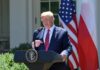
The White House emphasized that Iran must never get a nuclear weapon and thanked the United Nations for supporting that aim in a recent resolution. Trump also said Iran had been the “bully” of the region, but no more, and predicted a deal could come after the midterm elections. The sharp language drew reactions across the hall, but it also set clear red lines. Trump’s message was pressure first, with a path to talks if Tehran agrees to limits.
Signals Of Diplomacy Amid Threats
After the speech, news outlets reported that United States and Iranian officials met on the sidelines to explore a path to end fighting and reduce risks to global trade. That shows both sides still see value in talking, even while trading threats from the podium. Such backchannel contact often tests whether leaders can move from slogans to steps. Talks do not mean trust. They suggest each side wants to measure what the other will actually do, and at what price.
This moment fits a long pattern. Tehran argues it faces unfair scrutiny and sanctions. Washington and partners focus on gaps in inspections and years of unresolved questions. Recent reports from the International Atomic Energy Agency (IAEA) say inspectors have had little or no in‑field access to most declared nuclear sites in Iran during the reporting period, except for the Bushehr plant. That lack of access is not a small detail. It blocks normal checks meant to assure the world that nuclear work stays peaceful.
Verification, Double Standards, And Shared Public Frustration
Independent analysts who track past IAEA findings say the agency has flagged repeated noncompliance and weaker monitoring since 2018. Those assessments have urged censure and stronger action at the IAEA Board of Governors. Supporters of tighter pressure argue that promises are cheap without cameras, samples, and site visits. Iran rejects those claims and says inspections have been used as leverage, while Israel’s undeclared program remains outside the treaty system that binds Iran.
🔸 Iran’s UN address and conditions for negotiations:
The U.S. delegation left the UN General Assembly as Iranian President Pezeshkian began his speech.
Pezeshkian said: "No one in this region will have security alone, either we will build it together or we will have to live… pic.twitter.com/DjkLp52Rf6
— Israel RealTime (@IsraelRealtime) September 23, 2026
Many Americans hear these dueling claims and see a deeper problem. Leaders trade blame while the system meant to prevent war and stop nuclear spread breaks down. People on the right fear a regime they view as hostile may race ahead under cover of talks. People on the left fear a rush to conflict, spiraling oil prices, and more global chaos. Both worry that powerful elites will posture at the United Nations while regular families pay for higher gas, shaky markets, and endless crises.
How This Affects Security, Energy, And The Economy
Clear verification inside Iran would lower the risk of miscalculation. It could also calm oil markets. Every threat to the Strait of Hormuz, where much of the world’s oil passes, hits prices at the pump. Trump’s team links pressure to a deal that blocks a bomb and ends regional attacks. Iran links relief to respect for its rights and to a halt in what it calls unfair sanctions. Without a bridge between these views, the world faces more spikes in risk and cost.
What To Watch Next
Watch for any formal notice of follow-up talks, even quiet ones. Look for IAEA access to expand, or for another report that says inspectors remain blocked. Track whether Iran reduces enrichment or opens sites, and whether Washington offers staged relief tied to milestones. Words at the United Nations set the stage. Actual steps on access, enrichment, missiles, and regional attacks will show if this standoff moves toward a deal or toward a dangerous break.
Sources:
youtube.com, pbs.org, theguardian.com, nytimes.com, abcnews.com, reuters.com, thedailybeast.com