
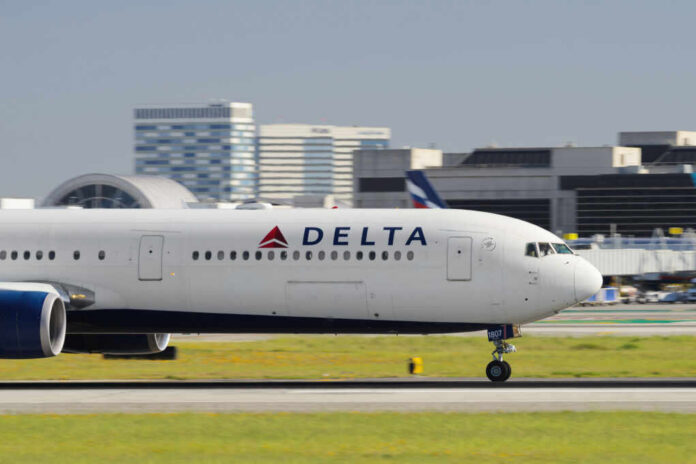
A Delta flight had to turn back just minutes after takeoff when a violent passenger sparked a midair security scare that every American traveler dreads.
Quick Take
- Delta Flight 2557 returned to Houston about 15 minutes after departure following a violent onboard disturbance.
- Multiple passengers were assaulted, and crew members with passenger help physically restrained the individual.
- Early reports indicated a possible cockpit access attempt, but Delta later said the passenger did not reach or attempt to access the flight deck.
- Police detained the passenger at the gate; authorities said the person was taken for a mental health crisis, and no charges were immediately filed.
What Happened on Delta Flight 2557
Delta Air Lines Flight 2557 left William P. Hobby Airport in Houston for Atlanta early Wednesday, Feb. 18, 2026, carrying 85 passengers and five crew members. Roughly 15 minutes after takeoff, the aircraft turned back and landed safely back in Houston. Reports from passengers and officials described a disruptive individual whose behavior escalated into violence, forcing the crew to prioritize immediate safety over continuing the short hop to Atlanta.
Witness accounts described the passenger striking several people and focusing on one man seated by a window, with descriptions that the attacker yanked at the man’s clothing and hair. The situation required a coordinated response, with about eight crew members and passengers working together to restrain the person until the aircraft returned to the gate. Delta later apologized for the delay and reiterated its policy of zero tolerance for unruly behavior.
Cockpit Concerns, Conflicting Early Reports, and What’s Verified
Initial emergency reporting created the most alarming headline: a possible attempt to reach the cockpit. Houston police received a call during the incident that “apparently an individual tried to gain entry into a cockpit,” and early reporting referenced cockpit-related concern relayed during the event. Delta later clarified an important detail for public accuracy, stating the passenger did not make contact with or attempt to access the flight deck. That distinction matters when evaluating the true security scope.
The Federal Aviation Administration confirmed the flight returned around 5:40 a.m. after the crew reported a passenger disturbance, and the agency said it would investigate. From a safety standpoint, the decision to turn back quickly reflects the simple reality of aviation: once an incident turns physical, crews must assume it can worsen fast, especially in tight quarters at altitude. The verified facts establish violence and disruption; the cockpit element remains the most disputed detail.
Law Enforcement Response and the Mental-Health Angle
Officers met the plane at the gate after it returned to Hobby Airport, and the passenger was escorted off with hands bound. Authorities said the person was transported for a mental health crisis, and reporting indicated no arrests or criminal charges were immediately filed while investigations continued. The passenger’s identity was not released publicly in early coverage. Those details underscore a frustrating gap many Americans notice: public safety incidents can end without clear accountability while agencies sort out next steps.
Why This Keeps Happening—and What It Means for Everyday Travelers
Local reporting framed the incident as another example of unruly behavior that surged during the pandemic era and never fully returned to “normal.” That’s more than an airline headache—it’s a public order problem playing out in a sealed metal tube where families, seniors, and business travelers have nowhere to go. The episode also renewed attention on cockpit barriers and layered security, because even the perception of a cockpit threat can trigger costly diversions and widespread fear.
Delta plane forced to return to Houston airport after 'unruly' passenger pummels man mid-flight: 'Not mentally there' https://t.co/7pDDfU18T4 pic.twitter.com/ChZKjAIFhh
— New York Post (@nypost) February 19, 2026
Delta Flight 2557 eventually re-departed and arrived in Atlanta about 90 minutes behind schedule, a reminder that one person’s meltdown can disrupt dozens of lives. The FAA investigation and local police inquiry were still ongoing in the early reports, and the available facts do not include a motive or trigger for the outburst. For travelers, the takeaway is practical: crews train for this, but prevention and consistent enforcement are what keep “unruly” from turning into truly dangerous.
Sources:
Delta Flight Houston Forced to Turn Around Hobby Airport Because Unruly Passenger, Airline Says
Person tries to breach cockpit on Delta flight from Houston to Atlanta
Unruly passenger detained after incident on Delta flight, police say
Delta flight from Hobby Airport returns after cockpit incident, police say