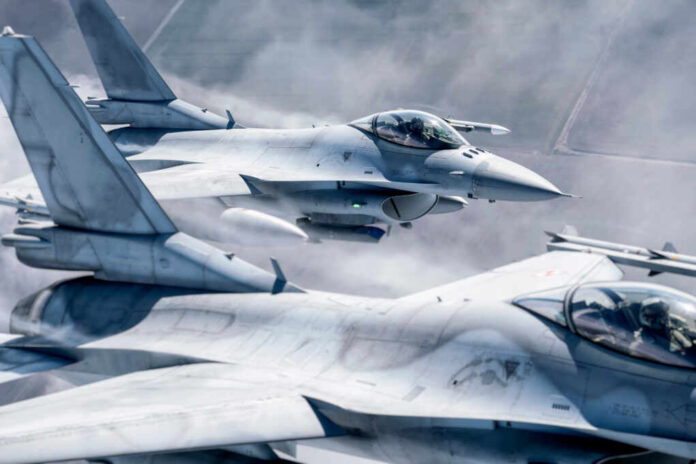
A technological breakthrough in stealth aircraft technology has revolutionized military strategies and left existing air defense systems obsolete.
Story Highlights
- Stealth technology emerged as a game-changer in military aviation.
- The F-117 Nighthawk and B-2 Spirit marked significant milestones in stealth innovation.
- Lockheed and Northrop played pivotal roles in stealth aircraft development.
- Stealth technology has shifted the military balance globally.
Revolutionizing Military Aviation
Stealth technology, a pivotal advancement in military aviation, began its journey in the 1970s. Initially developed in secrecy, it transformed the battlefield landscape by rendering existing air defense systems ineffective. The F-117 Nighthawk, developed by Lockheed, and the B-2 Spirit by Northrop, epitomize this technological leap. These aircraft can penetrate sophisticated Soviet-era defenses, fundamentally altering military strategies and capabilities.
The development of stealth aircraft was driven by Cold War tensions and the need for the United States to maintain air superiority. Lockheed’s mathematician Denys Overholser played a crucial role by adapting a Soviet model to create the Echo 1 program, predicting an aircraft’s radar cross-section. This innovation allowed the design of aircraft with minimal radar signatures, akin to the size of a bird, enabling operations deep within enemy territory without detection.
Commando raids, drones & stealth jets… how Trump could wage ‘land war' on drug cartels after boat blitz | The US Sun https://t.co/eGKfx6dS3M
— Boone Cutler 🦬🇺🇸 🦅 (@boonecutler) October 7, 2025
Key Players and Milestones
Lockheed Corporation led the charge with the F-117 Nighthawk, which became operational in 1983. Northrop followed with the B-2 Spirit, first flown in 1989. Both aircraft marked milestones, with the Nighthawk achieving its combat debut during the Panama invasion in 1989. Despite extensive combat service, the F-117 only suffered a single loss, showcasing its effectiveness. The B-2 Spirit further advanced stealth technology with its flying-wing design, offering strategic bombing capabilities.
Stealth technology’s impact extended beyond aviation, influencing naval and ground forces. The USS Zumwalt, commissioned in 2016, incorporated stealth principles with advanced radar-absorbing materials. Although ground vehicle applications remain experimental, the concept of hybrid stealth engines signifies ongoing innovation in military technology.
Global Implications and Future Prospects
The introduction of stealth technology ignited a global arms race, prompting nations like China to develop their own fifth-generation fighters. The strategic advantage provided by stealth aircraft cannot be overstated, as they enable deep penetration into enemy airspace without interception. As technology evolves, research into hybrid propulsion and advanced materials continues, ensuring the United States maintains its edge in stealth capabilities.
The ongoing advancements in stealth technology underscore its critical role in modern warfare. As the world evolves, so too must the strategies and technologies that protect national interests. Embracing these innovations ensures that military forces remain prepared to meet the challenges of tomorrow.
Sources:
Flying Under the Radar: The Top-Secret History of Stealth Warplanes
History of Stealth: From Out of the Shadows
Stealth Technology – Military Aircraft
The History of Stealth Technology