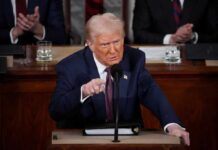
A new policy threatens judicial independence, sparking concern over foreign interference.
Story Highlights
- President Trump halts trade talks with Canada, citing alleged SCOTUS influence.
- The unprecedented linkage of trade policy to judicial independence raises eyebrows.
- Canadian-funded anti-tariff ads are at the center of the controversy.
- The move underscores Trump’s stance on protecting U.S. sovereignty.
Trump Halt Trade Talks Amid Judicial Independence Concerns
On October 7, 2025, President Donald Trump announced the termination of all trade negotiations with Canada. The decision comes in response to allegations that Canada attempted to influence the U.S. Supreme Court (SCOTUS) through an anti-tariff advertising campaign targeting American audiences. This development marks a significant escalation in trade tensions between the two nations, highlighting concerns over foreign interference in U.S. legal processes.
#REPORT: Donald Trump says that Doug Ford's anti-tariff ad campaign in the United States was trying to "illegally influence" the Supreme Court, further declaring that "based on their egregious behavior, ALL TRADE NEGOTIATIONS WITH CANADA ARE HEREBY TERMINATED!" pic.twitter.com/1i7AfGy1de
— Canada Proud (@WeAreCanProud) October 24, 2025
Implications of Foreign Influence Allegations
The allegations against Canada are unprecedented in the context of U.S.-Canada trade relations. Historically, disputes have focused on tariffs and perceived unfair trade practices. However, the direct linkage of these negotiations to alleged judicial interference sets this situation apart. The Canadian government has denied any wrongdoing, while Trump’s administration insists on protecting the integrity of U.S. institutions. The controversy not only affects diplomatic relations but also raises questions about the independence of the judiciary.
As trade talks remain suspended, the economic implications are becoming apparent. Short-term disruptions in cross-border trade are expected, leading to uncertainty for exporters and importers on both sides. In the long term, there is potential for lasting damage to U.S.-Canada relations, increased political tension, and possible shifts in supply chains. Canada’s reliance on U.S. trade adds another layer of complexity to the situation, with both nations needing to balance economic interests and sovereignty.
Reactions and Future Prospects
Both the U.S. and Canadian governments have issued statements defending their positions. President Trump has accused Canada of attempting to “illegally influence” SCOTUS, justifying the abrupt termination of talks. Canadian Prime Minister Mark Carney has called for a resumption of negotiations, denying any interference. Analysts warn of significant economic fallout if the suspension persists. The situation underscores the importance of maintaining stable U.S.-Canada relations, crucial for North American prosperity.
While some experts view Trump’s move as a strategic negotiating tactic, others argue it reflects genuine concerns over foreign influence. As the debate continues, the focus remains on the implications for judicial independence and the broader impact on international trade dynamics.
Sources:
Trump says all Canada trade talks ‘terminated’