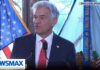
When ten out of twelve jurors say the Palisades Fire suspect is not guilty, yet a judge jails him and schedules a retrial, it raises hard questions about government power and due process.
Story Snapshot
- Ten jurors wanted to acquit Jonathan Rinderknecht, but a mistrial means he will be retried.
- Prosecutors lean on circumstantial digital evidence and ChatGPT logs instead of direct proof he lit the fire.
- Defense experts say fireworks, not a lone Uber driver, likely sparked the original blaze.
- The case exposes how federal power, big-city politics, and “junk science” can threaten constitutional protections.
Jury Doubts, Yet Judge Orders Jail And Retrial
Federal jurors in Los Angeles spent days weighing the government’s arson case against Jonathan Rinderknecht, the man blamed for the deadly 2025 Palisades Fire.[1] When they finally spoke, ten of the twelve said they believed he was not guilty, leaving only two jurors still convinced by the prosecution’s story.[3] Despite that strong split, Judge Anne Hwang declared a mistrial and quickly set a new trial date for October 19, ordering Rinderknecht jailed until then.[3] Defense attorney Steve Haney said the large not‑guilty majority “resoundingly” found the government’s evidence too weak to support a conviction.[6]
For many readers, that sequence sounds backward. The jury largely rejected the case, yet the man stays behind bars while prosecutors get a second swing. In a system built on the presumption of innocence and the idea that the government must prove its case beyond a reasonable doubt, a 10–2 split for acquittal highlights how aggressive federal prosecutors have become. Legal analysts have already called the mistrial a major setback for the Department of Justice, which now faces public doubts about why it is pressing ahead when most jurors were unconvinced.[15]
Government Relies On Circumstantial Evidence And AI Diaries
Prosecutors did not offer direct proof that Rinderknecht lit the initial Lachman Fire that later grew into the Palisades Fire.[6] Instead, they built a circumstantial case around where he was, what his phone recorded, and what he typed into ChatGPT.[1] Jurors saw geolocation data placing him near a clearing by the trail just as the fire began and heard testimony that he lied about his exact location during a long interview weeks later.[4][7] The government also pointed to a green grill lighter found in his rental car, claiming he used it to spark dry brush around midnight near a wealthy Pacific Palisades neighborhood.[4]
Investigators went deep into his digital life. They pulled records from his phone, email, Uber account, social media, and OpenAI, reviewing thousands of ChatGPT conversations that he used as a kind of personal diary.[2] In those chats, he wrote about anger, wealth inequality, and even speculated that someone might hypothetically start a fire in the Palisades out of frustration.[2][3] He recorded videos of firefighters battling the blaze, screen‑captured his 911 calls, and asked ChatGPT whether someone would be responsible for a fire accidentally started by a cigarette.[2][3][6] Prosecutors argued these steps showed he wanted to shape a story and mislead investigators, using artificial intelligence as part of a strange digital trail.
Defense Points To Fireworks And Flawed Investigation
The defense team countered that federal investigators were trying to pin a complex wildfire on one troubled man instead of facing possible failures in how local agencies contained the blaze.[6][9] Expert witnesses for the defense testified that the original Lachman Fire was most likely sparked by fireworks, not a grill lighter, giving jurors a concrete alternative cause.[4] They also stressed that the fire scene sat unsecured for thirteen days, making it easy for evidence to be lost or contaminated, far from best practices for serious arson work.[2][23] No accelerants were found, and the official account only confirmed an “open flame,” not a specific device or fuel source.[2]
Defense attorney Haney emphasized that investigators never found internet searches for arson methods, fire‑starting tips, or purchases of special ignition tools in Rinderknecht’s digital record.[2] That gap matters in a case that depends so heavily on electronic clues. Jurors also heard that he called 911 more than a dozen times and stayed at the scene while firefighters fought the blaze, behavior that does not match how most arsonists act.[2][6] In arson law, this pattern fits a broader problem: many prosecutions rest almost entirely on circumstantial evidence and fire investigator opinions, which can be shaky if the science is weak or scenes are poorly handled.[18]
What This Means For Liberty, Liability, And “Junk Science”
Conservatives watching this case see more than one man’s fate. They see a federal government willing to lock up a defendant even after most jurors rejected its theory, and a big‑city system eager to protect itself from thousands of civil lawsuits tied to how the fire was handled.[2] If Rinderknecht is eventually convicted, some of that blame and legal risk could shift away from the City of Los Angeles and its fire department, changing who pays for the disaster.[2][18] That raises fair questions about incentives when government agencies investigate events that could expose their own mistakes.
A mistrial was declared today in the trial of Palisades Fire arson suspect Jonathan Rinderknecht. After initially indicating it had reached a verdict, the jury announced Thursday it was unable to reach a unanimous decision, telling the judge the panel was at a “standstill".
— John Burtis (@burtis_john) June 27, 2026
The Palisades case also highlights growing concern over “junk science” in arson investigations. Courts now demand that expert testimony follow solid scientific methods and standards like the National Fire Protection Association’s guide, not gut feelings or outdated burn‑pattern lore.[25] When crime scenes are left open for days and key physical evidence is missing, any claim of intentional fire‑setting becomes harder to trust. For a Trump‑era conservative who values limited government and strict proof before taking away a person’s liberty, the lesson is clear: circumstantial digital trails and politicized narratives should never be enough to send someone to prison for decades.
Sources:
[1] YouTube – 10 of 12 jurors say Palisades Fire suspect isn’t guilty. Now he faces …
[2] Web – Palisades Fire suspect Jonathan Rinderknecht heads to trial – CNN
[3] Web – A deadlocked jury in the Palisades Fire trial leaves attorneys …
[4] Web – Judge declares mistrial in Palisades Fire suspect’s federal trial
[6] Web – United States v. Jonathan Rinderknecht – Department of Justice
[7] Web – Mistrial declared after jury deadlocks in arson trial over deadly 2025 …
[9] YouTube – Jury remains deadlocked in trial of Palisades Fire arson …
[15] Web – Jurors deadlocked in arson trial of Palisades Fire suspect
[18] Web – [PDF] Circumstantial Evidence in Arson Cases – Scholarly Commons
[23] Web – ELI5:How do fire forensics know if a fire was from an arsonist vesus …
[25] Web – [PDF] Arson in Chicago: Patterns and Correlates