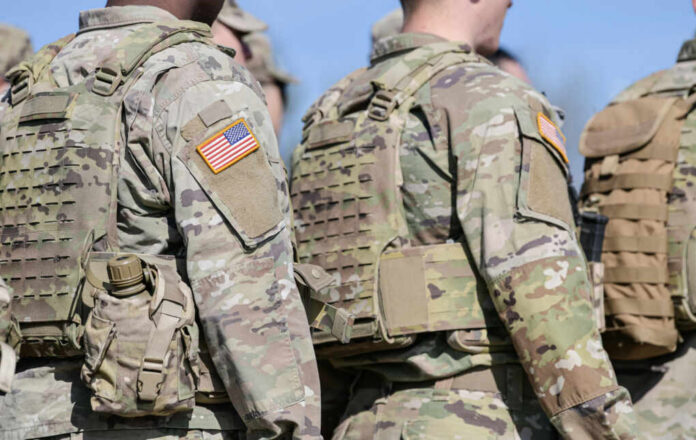
A new Pentagon-backed study quietly admits that America’s elite warriors are getting cancer more often, while Washington still refuses to fully own the cost of decades of toxic exposures.
Story Snapshot
- Special Operations Forces face an 18% higher overall cancer rate than other troops, driven by melanoma and testicular cancer.
- The study hints at toxic exposures but openly says it cannot prove causation, leaving many questions unanswered.
- Absolute risk is low on paper, yet operators are being diagnosed younger, after years of high-intensity service.[4]
- Previous military research once claimed “no increased risk,” fueling distrust after years of official denial.[9]
SOCOM Study Confirms What Operators Have Suspected for Years
U.S. Special Operations Command has released the first major cancer study focused on the Special Operations community, and the numbers are hard to ignore. Researchers found that Special Operations Forces personnel have an overall cancer incidence about 18 percent higher than a matched group of non-Special Operations troops, based on more than 231,000 community members.[1][4] The increase is driven mainly by melanoma, which is 33 percent higher, and testicular cancer, which is 21 percent higher in this elite group.[1][4]
Study data show 2,105 cancer cases in the Special Operations cohort, or 76.51 cases per 100,000 people, compared to 65.31 cases per 100,000 in the comparison group.[1] On a slide, officials stress that this translates to about 11 extra cases per 100,000 Special Operations members per year and that the absolute risk remains “less than 1 out of 100.”[4] For men and women who spent decades on ranges, in burn pits, and under brutal sun, that reassurance may ring hollow.
Higher Risk, Younger Diagnoses, but Lower Death Rates
Special Operations personnel are not only getting certain cancers more often, they are getting them younger. The command reports that diagnoses in this community tend to occur at earlier ages than in non-Special Operations troops, yet survival is better.[3][4] The study found a roughly 40 percent lower cancer mortality rate in Special Operations members compared with non-Special Operations peers, which reflects younger age, strict fitness standards, and aggressive care inside the military system.[1]
This strange mix — higher diagnosis but lower death — mirrors other military cancer reviews, like studies of aviators and ground crews that found higher melanoma and thyroid cancer but no clear proof linking occupation and disease.[19] In the Special Operations study, the command itself admits the same limit. The official summary states that the research “cannot determine causation,” even as community groups highlight familiar suspects like suppressor gas blowback, lead dust on ranges, pesticides, and blast overpressure.[1][2][4]
Years of Denial and New Questions for Military Leadership
For many veterans, this new study does not come out of nowhere. A 2022 paper from a Special Operations nonprofit notes that the only official study done in 2016 claimed there was “no increased risk” of cancer in this population.[9] That earlier message helped keep concern quiet, even as nonprofits and families saw more diagnoses. Now, with the 18 percent increase finally on paper, trust is strained. People want to know why it took so long and why the government line flipped so sharply.
Critics also point out that the current analysis is sensitive to how the cohort is defined. When researchers tightened service date parameters, the gap shrank but did not disappear, with a 9 percent higher overall cancer incidence and reduced but still elevated melanoma and testicular cancer risks.[1] Special Operations Command has also relied in part on calls for troops and veterans to self-report screenings and diagnoses, which raises concerns about reporting bias and undercounting in earlier years.[6][7] That history feeds a broader conservative worry: big institutions admit problems only when they can no longer be ignored.
Fighting for Accountability and Protection for America’s Warriors
The Special Operations findings fit a larger pattern across the force. Other research shows higher cancer rates tied to military service, including elevated genitourinary and breast cancers and higher lung cancer risk in veterans exposed to asbestos, burn pits, and chemicals.[13][17] For many in the conservative base, this points to a simple truth: the federal bureaucracy was quick to send our best into harm’s way, but slow to face the long-term cost of toxic exposure once they came home.
The Trump administration has pushed to clean up past neglect and support veterans, but this new data shows the work is not finished. Limited government does not mean government can dodge its basic duty to those who volunteered. The next step must be real transparency on exposures, faster recognition of service-connected cancers, and strong screening and prevention focused on front-line communities like Special Operations. Our warriors kept their promise. Now Washington must keep its promise to them and their families.
Sources:
[1] Web – SOCOM Study of Special Operators Finds 18% Higher Cancer Risk
[2] Web – SOCOM Study Finds Special Operations Personnel Cancer Concerns
[3] Web – SOCOM study just confirmed what the SOF community has known …
[4] X – Special Operations Face 18% Higher Cancer Risk: SOCOM Study
[6] Web – Video – SOF Cancer Study – DVIDS
[7] Web – SOCOM calls for special ops veterans to report cancer screenings
[9] Web – SOF Cancer Study – SOCOM.mil
[13] Web – Cancer in SOF: What to know to get ahead of anxiety and risk
[17] Web – Military environmental exposures and risk of breast cancer in active …
[19] Web – [PDF] Evaluation of Postdeployment Cancers Among Active Duty Military …