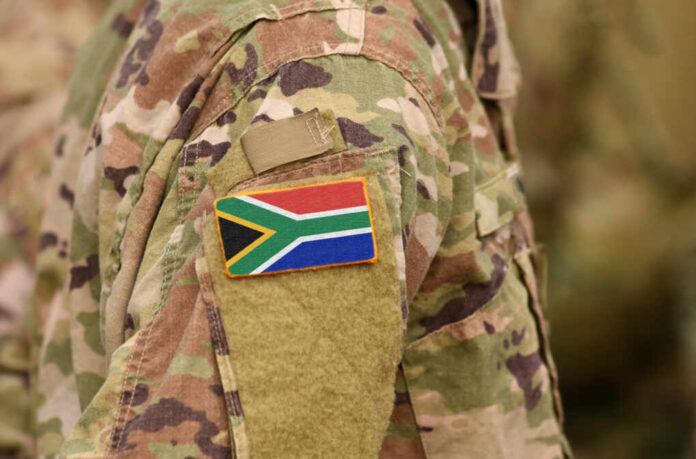
South Africa’s top general pledged support to Iran’s military in an unsanctioned visit, exposing a dangerous breach of military neutrality.
Story Snapshot
- South Africa’s Chief of Defence, General Maphwanya, visited Iran and publicly expressed support for its special forces without government approval.
- The South African government and presidency quickly distanced themselves, labeling the visit “ill-advised.”
- Opposition parties demanded disciplinary action, citing the violation of military neutrality and the risk to South Africa’s international reputation.
- The controversy has increased scrutiny of civil-military relations and exposed deep political divisions within South Africa.
Unapproved Military Diplomacy Sparks Political and Diplomatic Crisis
In early August 2025, General Rudzani Maphwanya, the Chief of the South African National Defence Force, traveled to Iran, meeting with Iranian military officials and inspecting a special forces unit. During the visit, Maphwanya made public remarks interpreted as pledging military and political support for Iran—a move that immediately raised alarms in diplomatic and political circles. The South African presidency was quick to clarify that the visit was not officially sanctioned, describing it as “ill-advised” and asserting that Maphwanya’s statements did not reflect official government policy.
READ NOW: South Africa's Head General Visited Iranian Special Forces Unit — General Rudzani Maphwanya inspected an Iranian special forces unit last week, despite efforts by his government to disavow his…https://t.co/MX5zpelL3X
— Top News by CPAC (@TopNewsbyCPAC) August 17, 2025
The incident has triggered intense backlash across the South African political spectrum. The Department of International Relations and Cooperation (DIRCO) issued a formal statement distancing the government from Maphwanya’s remarks, underscoring that foreign policy remains the purview of the executive, not the military. Opposition parties, particularly the Democratic Alliance, have demanded immediate disciplinary action, arguing that the general’s conduct breached the SANDF Code of Conduct and undermined the principle of military neutrality.
Watch: ‘SANDF Chief’s visit to Iran was ill advised’ – Presidency
Historical Tensions and Foreign Policy Non-Alignment Under Scrutiny
South Africa’s engagement with Iran is rooted in a decades-long policy of non-alignment and diplomatic ties with a broad range of global partners, including states under Western sanctions. This approach has repeatedly drawn suspicion from Western allies, particularly the United States and the European Union. Previous incidents—such as South Africa’s participation in joint naval exercises with Russia and China—have strained these relationships.
The timing of the visit is particularly sensitive, occurring amid heightened global tensions and ongoing debates over South Africa’s participation in organizations like BRICS and its stance on contentious geopolitical issues. The episode underscores the risks inherent in blurred lines between military and civilian authority, challenging the constitutional order that demands clear civilian oversight of the armed forces.
Political Fallout and the Future of Civil-Military Relations
The Democratic Alliance has called for Maphwanya’s court-martial, citing gross misconduct and a disregard for the established chain of command. Meanwhile, the South African Communist Party has come to the general’s defense, accusing critics of geopolitical hypocrisy and framing the backlash as a symptom of Western double standards. Despite these polarized responses, no formal disciplinary action has been announced as of mid-August, and the incident remains under official review, prolonging uncertainty and public debate.
For South Africa, the stakes are significant. In the short term, the episode has embarrassed the government and strained relations with key Western partners. If similar incidents persist, the long-term consequences could be severe: erosion of trust between civilian and military leadership, diminished foreign investment, and diplomatic isolation if the country is perceived as aligning too closely with sanctioned or controversial regimes. The defense and foreign policy sectors face increased scrutiny, and political leaders must now navigate the fallout to restore confidence in constitutional oversight and international credibility.
Sources:
DIRCO clarifies remarks, foreign policy after SANDF chief’s Iran visit | SAnews.gov.za
SACP defends SANDF chief Maphwanya over his Iran comments | Eyewitness News (EWN)