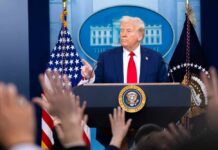
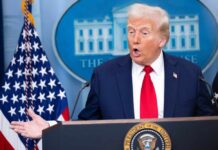
The Trump administration has launched an unprecedented move to dismantle the Department of Education, a decision that could permanently transform the way American children are taught.
Story Snapshot
- President Trump signed an executive order in March 2025 to dismantle the Department of Education, fulfilling a major campaign promise.
- Education Secretary Linda McMahon insists this is a bipartisan effort to empower states and local communities, releasing $6.8 billion in federal funds directly to states.
- Critics warn the move threatens protections and funding for vulnerable students, while supporters see a return to constitutional principles and parental rights.
- The decision draws sharp ideological lines, reigniting debates over states’ rights, federal overreach, and the future of public education.
Trump Acts to Restore State Control Over Education
President Donald Trump’s March 2025 executive order to dismantle the U.S. Department of Education is being hailed by conservative supporters as a long-overdue return to constitutional principles and a rejection of decades of federal overreach. Speaking at the National Governors Association meeting, Education Secretary Linda McMahon announced the immediate release of $6.8 billion in previously frozen federal education funds to states, promising ongoing support for students and teachers throughout the transition. This marks the first serious effort to abolish the Department since its inception in 1979, a goal that has been part of conservative platforms for over four decades.
Linda McMahon pulls back the curtain on Trump's plan to dismantle the Department of Education https://t.co/iTnsZHoyAu
— Deenie (@deenie7940) August 1, 2025
Secretary McMahon, in her public statements, emphasized a bipartisan approach and a focus on declining student achievement since the pandemic, while pledging that the administration would work to ensure a smooth transition for states assuming these new powers.
Watch: Trump signs executive order dismantling the Education Department
Uncertainty for States, Schools, and Families as Transition Begins
The Department of Education has begun staff reductions and the complex process of shifting responsibilities to other federal agencies or state governments. While the administration promises continuity of funding and services, critics question whether states can quickly absorb these new duties and maintain protections for vulnerable students. Governors from both parties have expressed gratitude for the release of federal funds but remain concerned about the capacity and resources required to take on new oversight functions. The process will require congressional action to fully reallocate statutory responsibilities and permanently close the Department, a step that remains pending[1][3].
In the short term, Department employees and program administrators face immediate uncertainty, and there is the potential for disruption in the enforcement of civil rights protections and special education services. For families in high-poverty or rural areas, the loss of federal oversight could mean fewer resources and greater disparities. Yet, supporters counter that local innovation, responsiveness, and accountability may ultimately deliver better results than a distant federal bureaucracy ever could.
National Debate Over Federal Role in Education Resurfaces
This historic policy shift has reignited the national debate over states’ rights, the constitutional limits of federal power, and the very purpose of public education. Supporters frame the dismantling as a defense of American freedom, family values, and a long-awaited rollback of government overreach. Critics fear a “race to the bottom” as states compete to cut costs and lower standards, jeopardizing the future of America’s most vulnerable children.
Whether this marks a new era of educational excellence or a retreat from national standards and civil rights protections will depend on how states and communities rise to the challenge—and how Congress, courts, and voters respond in the months ahead. As this monumental experiment unfolds, the nation will be watching closely.