
Gas prices are jumping again because chaos over who controls the Strait of Hormuz is choking the world’s oil lifeline, even as Washington insists the route is “open.”
Story Snapshot
- U.S. officials say the Strait of Hormuz is open and under American protection, while Iran claims it can close or control the passage.
- Oil and gas prices are rising as tanker traffic slows and companies avoid a war zone, despite some ships still moving through.
- The United States has created a new “guardian” role in the strait, using its Navy to guide ships and counter Iran’s threats.
- Americans on the left and right see soaring fuel costs as one more sign that global crises and elite decisions keep crushing the working public.
Strait of Hormuz Tension Pushes Oil and Gas Prices Higher
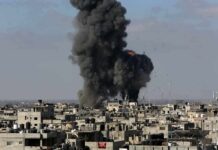
Gas prices in the United States are climbing again after months of turmoil in the Strait of Hormuz, the narrow waterway that carries about a fifth of the world’s crude oil. Reporters link the rise in pump prices to surging crude costs, driven by repeated shutdowns, attacks, and threats in and around the strait as the United States, Israel, and Iran trade strikes. When shipping companies pull back and tanker traffic slows, global oil supply tightens. That squeeze shows up quickly in higher prices at the pump for everyday drivers.
Oil markets react fast to every new clash near the strait. News outlets have tracked multiple spikes this year when Iran either shut the passage, attacked tankers, or warned foreign ships to stay away. Brent crude, the global benchmark, has jumped by as much as 13 percent in a single day, reaching highs not seen in more than a year. Analysts warn that if the disruption lasts, U.S. gasoline could reach or even pass $5 a gallon again, echoing the pain Americans felt during the last big energy shock.
Washington’s ‘Guardian’ Role and Iran’s Competing Claims
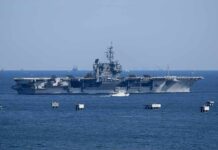
Defense Secretary Pete Hegseth has insisted that the United States now effectively guards the Strait of Hormuz, saying U.S. naval forces oversee traffic and can sustain operations “all day.” U.S. Central Command spokesperson Captain Tim Hawkins has publicly rejected Iran’s claims that the strait is closed, stating that Iran “does not control” it and that traffic continues to move under U.S. monitoring. This message fits a long-standing American goal: to present the strait as open and protected so global energy flows, and U.S. power, appear secure.
Iran tells a very different story. Iranian commanders have repeatedly claimed “full control” over the strait and nearby waters, arguing they can block ships or demand coordination and even fees from foreign vessels. Investigative reporting describes Iran building checkpoints on islands, striking deals with some governments, and imposing layered checks on ships, effectively giving it strong leverage over who passes and on what terms. Legal analyses note that while Iran and Oman share territorial claims there, international law treats the Strait of Hormuz as a global transit route that no single country should fully control.
From Ceasefires to Blockades: Why Traffic Is Still Not “Normal”
The fighting and diplomacy have swung back and forth for months. At times, Iran has announced the strait was “completely open” during a ceasefire, causing oil prices to plunge as markets hoped for relief. At other moments, Tehran reversed course within days, firing on ships that tried to pass and reasserting tight control after the United States kept its blockade on Iranian ports. President Donald Trump has alternated between pausing naval escorts to pursue a deal and re-launching “Project Freedom” operations to guide tankers through dangerous waters.
Even when Washington or Tehran declares the strait open, shipping data tells a harsher story. Traffic has fallen from about 130 vessels a day before the war to a fraction of that, with some weeks seeing only a few dozen transits. Analysts say selective drone and rocket strikes, along with insurance fears, can shut down tanker flows without a full military blockade. In some recent days, U.S. commanders have boasted of dozens of ships crossing under American watch, but other reports describe tanker traffic “effectively ceased” because the area still looks too risky to many operators.
Why Open Transit Does Not Mean Lower Prices Yet
Energy experts warn that even a formally “open” strait will not push gas prices down overnight. One analysis notes that after a new ceasefire and a memorandum reopened the passage, only a handful of ships moved at first, and it would take time for oil flows and inventories to return to normal levels. Another explainer points out that war in the Middle East has already blocked traffic for months, so storage has been drained and supply chains scrambled. That damage does not vanish as soon as navies stop firing.
ICYMI O/N & WEEKEND
IRAN:
U.S. and Iranian forces exchanged heavy missile and drone assaults, with Tehran targeting U.S. facilities in states across the Gulf and saying it had again closed the vital Strait of Hormuz, sending oil prices higher. (RTRS)
The U.S. military said it…
— trap_zack (@ZackEiseman) July 13, 2026
For American families, the result feels painfully familiar. People on the right see another example of global turmoil, high energy costs, and a system that lets distant conflicts hit their wallets while Washington talks about control and victory. People on the left see working households squeezed as fuel costs drive up food, shipping, and rent, even as elites in both parties argue over strategy and blame each other. Across the spectrum, many look at the Strait of Hormuz standoff and see proof that ordinary citizens pay when powerful states gamble over vital resources.
Sources:
19fortyfive.com, wsj.com, youtube.com, fortune.com, reuters.com, nbcnews.com, justsecurity.org, cnbc.com, apnews.com, pbs.org, nytimes.com, straitstimes.com, en.wikipedia.org, yipinstitute.org