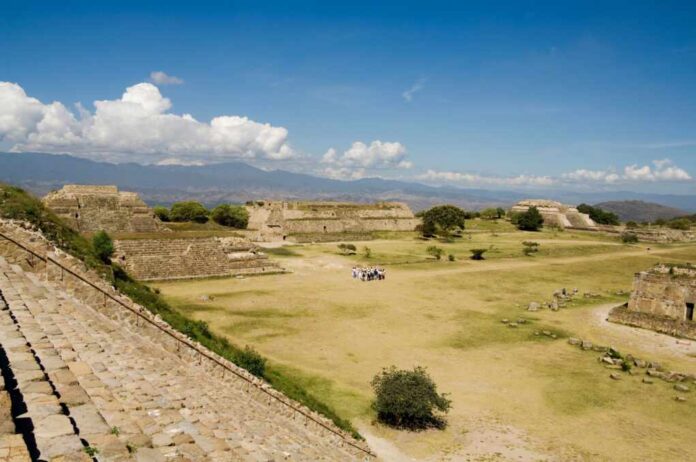
An astonishing archaeological discovery challenges conventional narratives about Aztec dominance, unveiling a massive Zapotec city hidden beneath the Oaxacan forest.
Story Highlights
- Advanced lidar technology uncovers a sprawling 600-year-old Zapotec city, previously mistaken for a fortress.
- Discovery reshapes understanding of pre-Hispanic urbanization and challenges assumptions about Aztec expansion.
- The site’s preservation offers a rare glimpse into a pre-Hispanic city, untouched by post-colonial development.
- The city of Guiengola highlights the Zapotecs’ strategic control over key trade routes in ancient Mesoamerica.
Technological Breakthrough in Archaeology
In an impressive demonstration of technological prowess, the Guiengola Archaeological Project utilized lidar technology to reveal a significant pre-Hispanic city in Oaxaca. The site, initially thought to be a fortress, was uncovered through laser mapping, exposing 1,173 structures. This discovery, conducted between 2018 and 2023, has fundamentally altered our understanding of the Zapotec civilization’s urban development and strategic territorial expansion.
The application of lidar allowed Ramón Celis and his team to map the city in just two hours, a task that would have taken years using traditional archaeological methods. This breakthrough not only showcases the efficacy of lidar in archaeology but also emphasizes the importance of technological innovation in uncovering historical truths obscured by dense forest canopies.
LiDAR Reveals 2,500-Year-Old Lost Cities in Amazon Rainforest – Ancient History pic.twitter.com/7tTpLoJ43p
— Doolly Noted ✏️ (@doollynoted) November 26, 2025
Historical Significance of Guiengola
Constructed in the 15th century, Guiengola was a pivotal center for the Zapotecs, strategically positioned to control trade routes to Soconusco. The city’s significance is further underscored by its role in resisting Aztec expansion, with historical records highlighting a successful defense against a siege. The discovery of this city challenges the narrative of unopposed Aztec dominance, revealing a more complex picture of Mesoamerican geopolitics.
Guiengola is uniquely preserved, having been abandoned just before the Spanish conquest. This lack of post-Hispanic development offers an unprecedented opportunity to study Zapotec urban life in its original context. The site’s preservation allows archaeologists to explore the social, political, and economic structures of a pre-Columbian civilization without the complications of colonial overlays.
Implications for Archaeology and Beyond
The discovery at Guiengola has immediate and long-term implications for archaeology. In the short term, it redefines the site’s classification from a military fortress to a sophisticated urban center, influencing future research and conservation efforts. In the long term, it encourages a reevaluation of pre-Columbian history, stressing the resilience and complexity of indigenous civilizations like the Zapotecs.
This breakthrough also underscores the need for continued investment in advanced technologies for archaeological research. It highlights the potential for similar discoveries in regions obscured by natural barriers, promising new insights into other ancient cultures and their interactions. As technology continues to advance, so too will our understanding of the rich tapestry of human history.
Sources:
Laser Analysis Reveals Zapotec City Guiengola, Mexico
Researchers Thought It Was Just a Fortress. It Turned Out to Be a Lost Zapotec City
Lost Zapotec City Revealed
Sunken City Discovered in Kyrgyzstan Lake