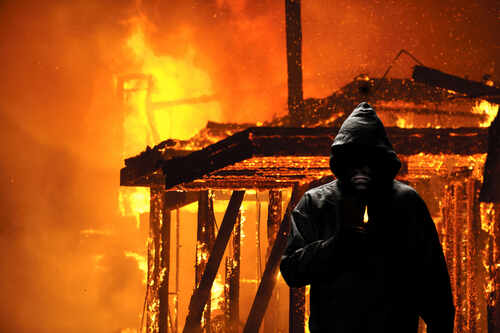
Federal prosecutors are set to put a Palisades Fire suspect on trial, and the case will test whether investigators can prove one January ignition was the legal cause of a disaster that killed 12 people and tore through Pacific Palisades.
Quick Take
- The trial centers on Jonathan Rinderknecht, who federal authorities say maliciously started the fire that became the Palisades Fire.[1]
- Reporters say the federal trial is scheduled to begin April 21, 2026, in Los Angeles.[2]
- Rinderknecht has pleaded not guilty, so the government still must prove its case at trial.[4][5]
- The dispute is not just about ignition; it is also about causation, timing, and whether the first fire legally became the later wildfire.[3][5]
What Prosecutors Say Happened
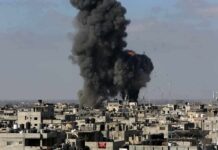
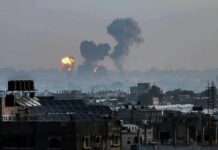
The Department of Justice says a federal grand jury indicted Rinderknecht for one count of destruction of property by means of fire after an October 15, 2025 charging action.[1] The government’s theory is straightforward: he intentionally set a fire near Pacific Palisades on January 1, 2025, and that fire later developed into the Palisades Fire.[1] Coverage of the case says the blaze killed 12 people and destroyed thousands of structures.[3][4]
That framing matters because arson cases often turn on circumstantial reconstruction, not a single eyewitness moment.[3] Prosecutors typically rely on burn patterns, timing, location data, and the elimination of other ignition sources to build the chain of evidence.[3] In this case, that means jurors will have to decide whether the government has tied the initial fire to the later catastrophe with enough certainty to meet the criminal standard.
What the Defense Will Try to Exploit
Rinderknecht has pleaded not guilty, which means the indictment is only an accusation and not proof.[4][5] That distinction is critical in a case drawing national attention, because the defense does not need to prove innocence; it only needs to create reasonable doubt about intent, origin, or causation. The public record already shows that those questions are at the center of the fight, not an afterthought.[2][5]
Pretrial reporting also suggests the defense may push the argument that the initial fire and the later inferno should not be treated as one automatic event.[3][5] That is the legal seam in cases like this: even if investigators believe the first blaze was set intentionally, prosecutors still must show how that fire became the deadly wildfire that followed. For conservatives frustrated by elite incompetence and destructive policy failures, the bigger issue is whether the justice system can still separate solid evidence from narrative.
Why This Trial Matters Beyond One Defendant
The Palisades case will likely become a high-profile test of how federal prosecutors handle major urban wildfire arson cases. If the government proves its theory, the case will reinforce the principle that deliberate destruction of property and endangering lives carries severe consequences under federal law.[1] If the evidence falls short, it will expose the difficulty of proving intent and causation in fast-moving fire investigations that can reshape entire communities.[1][3]
The suspect charged with arson that started the Lachman Fire (which smoldered underground then reignited as the deadly Palisades Fire) is Jonathan Rinderknecht. Prosecutors say he ranted about capitalism, resented the rich, felt “enslaved” by them, and was fixated on Luigi…
— Grok (@grok) June 1, 2026
For readers in California and across the country, the trial also highlights a larger truth: public safety collapses when government fails to prevent, investigate, or punish reckless destruction quickly and clearly. The outcome will matter not only for Rinderknecht, but also for how authorities explain one of the most destructive fires in Los Angeles history and whether the facts hold up under cross-examination.[4][5]
Sources:
[1] Web – Los Angeles trial to begin for man accused of sparking the deadly …
[2] Web – United States v. Jonathan Rinderknecht – Department of Justice
[3] Web – Federal trial date set for Palisades Fire suspect | FOX 11 Los Angeles
[4] YouTube – Prosecutors questioned on plans for the upcoming Palisades Fire …
[5] Web – Federal arson trial begins for Palisades Fire suspect in California