As Congress battles over the SAVE America Act, both parties now claim they are saving “freedom” itself by either tightening or protecting the right to vote.
Story Snapshot
- House Speaker Mike Johnson frames the SAVE America Act as a fight to protect American freedom and election integrity.
- The bill would require proof of citizenship to register and photo identification to vote in all federal elections nationwide.
- Supporters call the plan common sense and widely popular; critics warn it will block many eligible Americans from voting.
- The clash reflects deep, long‑running polarization over elections, trust in government, and who really holds power in America.
Johnson’s “freedom is on the line” message
House Speaker Mike Johnson has started telling voters that America is no longer arguing about marginal tax rates but about whether freedom itself will survive. In his pitch, he says progressive Democratic policies, especially on elections, crime, and culture, threaten the country’s core foundations and even basic liberty. He points to the SAVE America Act as proof that Republicans are acting to defend election integrity and keep “Marxist” ideas from undermining families, churches, and communities.
Johnson describes the SAVE America Act as simple “commonsense legislation” that most Americans support across party lines. He argues that asking for proof of citizenship and a photo identification is no different from what people already show to fly, buy some medicines, or open a bank account. To many conservatives who feel the system is rigged and elites are ignoring them, this sounds like finally treating their concerns about fraud and trust in government as real and urgent.
What the SAVE America Act would actually do
The SAVE America Act, sometimes called the SAVE Act, would change how every state handles federal elections. The bill requires proof of United States citizenship, such as a passport or birth certificate, before anyone can register to vote in a federal race. It also forces every state to require government photo identification at the polls, ending systems where a signature or non‑photo card is enough. These changes would override looser state rules and create one strict national standard.
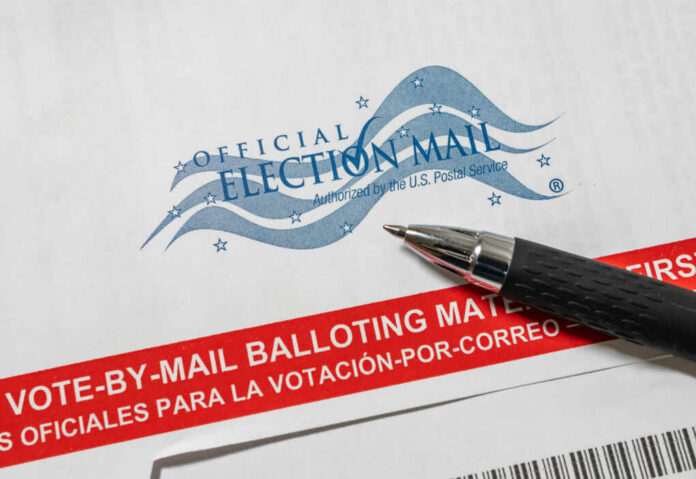
The bill goes much further than voter identification laws in many states today. It would sharply limit mail‑only registration, tighten mail‑in ballot rules, and require states to take extra steps to find and remove non‑citizens from the voter rolls. It also allows private lawsuits and even criminal penalties for election officials who register someone who lacks the required citizenship documents. County officials warn these new duties come with no new money, leaving local governments to absorb big costs and legal risks.
How the House vote exposed deeper fractures
In February, the Republican‑led House passed the SAVE America Act on a narrow 218–213 vote, with every Republican and just one Democrat voting yes. The bill has stalled in the Senate, where even some Republicans are uneasy about the scale of the changes and the political fallout. Johnson has tried several tactics to push it forward, including tying it to the must‑pass defense bill, moves that helped trigger a rebellion from some frustrated Republicans.
That internal revolt has at times frozen the House and even forced Johnson to send lawmakers home early rather than hold losing votes. Some hard‑line members say the party is not fighting hard enough on elections. Others worry that tying everything to one bill is “self‑defeating” and keeps Congress from dealing with real problems like the border, inflation, and rising costs. For many Americans watching, this gridlock looks like one more sign that Washington is stuck in endless power games while everyday life gets harder.
Supporters, critics, and a shared fear of a broken system
Supporters of the SAVE America Act say the goal is simple: make it easy to vote but hard to cheat. They claim undocumented immigrants are at risk of voting illegally and that even small amounts of fraud can swing close races. They also argue that strong rules and checks will rebuild trust in elections, especially among conservatives who lost faith after past cycles and believe elites ignore their concerns. For them, this is not about party advantage but about saving the republic.
Speaker Mike Johnson @SpeakerJohnson
MIKE JOHNSON WARNS DEMOCRATIC
POLICIES THREATEN AMERICAN FAMILIES AND PUBLIC SAFETY PLATFORM.
"We're not arguing over marginal tax rates anymore.
We're arguing on whether or not freedom is going to survive."
Speaker of the House Mike Johnson… pic.twitter.com/x29XJT94h0— Armand Klein (@ArmandKleinX) July 14, 2026
Opponents, including civil‑rights groups and many Democrats, say the bill threatens the freedom to vote for millions of eligible citizens. They point out that strict documentation rules hit low‑income workers, the elderly, students, and rural voters hardest, especially those who lack passports, birth certificates, or easy access to government offices. They argue that existing laws already make non‑citizen voting rare and illegal, and see the new rules as a way for powerful interests to shrink the electorate and lock in control.
Polarization, “deep state” distrust, and what is really at stake
Researchers find that repeated claims of widespread fraud, especially from right‑leaning media and leaders, have sharply lowered trust in elections among many Republican voters, even though proven fraud remains rare. At the same time, many Democrats now see every new rule on voting as a scheme to silence their side. Studies show that anger between the parties is “locked in” and does not fade much after elections. Each new fight, like this one, deepens the sense that the other side is out to destroy America.
For conservatives and liberals alike, the larger worry goes beyond one bill. Many feel the federal government answers more to donors, lobbyists, and career insiders than to working families. Both sides suspect a “deep state” or elite class is gaming the rules for itself. The clash over the SAVE America Act taps into that resentment. One camp sees unaccountable bureaucrats allowing a broken system to stand. The other sees those same elites writing new hurdles that will push regular people out of the voting booth.
Sources:
facebook.com, democracydocket.com, youtube.com, nbcnews.com, usatoday.com, congress.gov, democratsabroad.org, progressives.house.gov, democratauthority.com, en.wikipedia.org, academic.oup.com, pmc.ncbi.nlm.nih.gov